Back when AI wasn’t even on the radar: Magdeburg Theatre is staging ‘Così fan tutt*e’ as one of the very first computer games featuring blocky pixels and Tetris squares. The Magdeburg Philharmonic Orchestra provides the perfectly angular, sparkling soundtrack to accompany it.
What a time the 1980s were: In garages all over the world – primarily in the United States – young people sat at clunky screens, geekily tinkering with new programmes and games on the very first computers. The Commodore 64 (the ‘C64’), Atari and Amiga 500 came without hard drives, and the first computer games took minutes to load. Bill Gates’ garage-based company developed PCs and achieved a breakthrough with ‘Microsoft’.
The first platform games stuttered and squeaked to odd sounds, whilst the falling, ever-accelerating, blocky Tetris pieces had to be lined up and sorted by players with increasing speed. With the advent of the first Nintendo consoles, the focus then shifted to more portable devices for the first time.
And on television, private broadcasters were authorised, which would occasionally show risqué programmes and films in the evenings. Mobile phones, the internet and AI? Still nowhere to be seen and a long way off.
Martina Gredler’s new production takes its cue from this look back. Right from the start, Anneliese Neudecker’s set design establishes the striking starting point for Mozart’s play about love and mistaken identity: a cramped garage space on the left, crammed full of technical equipment, where the early IT pioneers, Guglielmo and Ferrando, are tinkering away. And they dream of money and love. Don Alfonso, who opens the curtain whilst pulling the strings with a joystick, wins the others over. The wager begins.
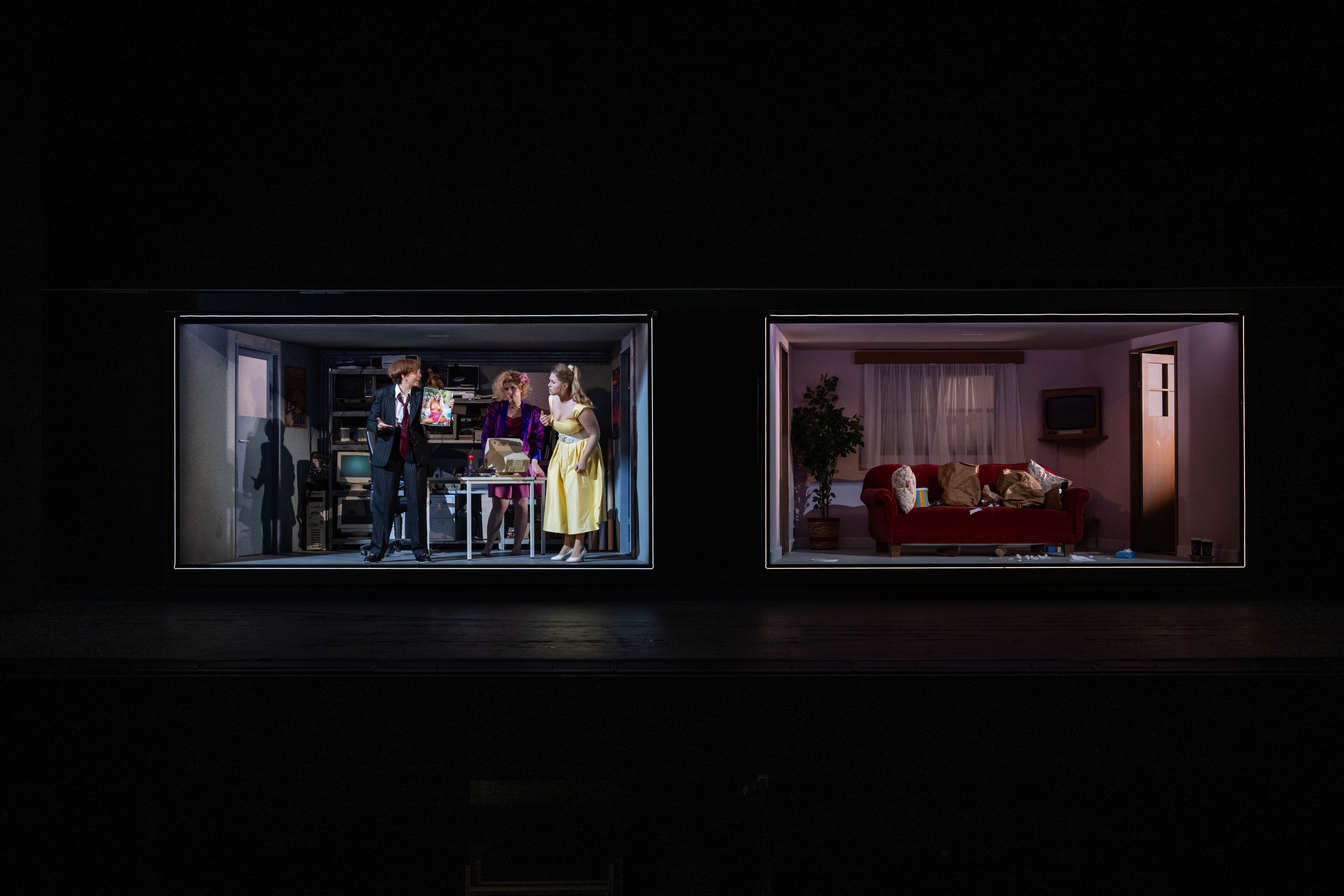
On the right-hand side of the stage, Fiordiligi and Dorabella sit rather primly on the sofa, watching an adult film on their private television. Eventually, Despina joins them, dressed in a suit. The game begins, and the intrigues, mix-ups and disguises are portrayed in this computer game of giant pixels – the set changes impressively into a 3D Tetris world – in a thoroughly appropriate manner, never appearing comical or out of place. The common problem of barely recognisable disguises and ridiculous-seeming role reversals is thus skilfully avoided.
And this often makes it simply fun to watch as the gentlemen and ladies play their way through the levels in colourful Tetris squares (costumes by Moana Stemberger).
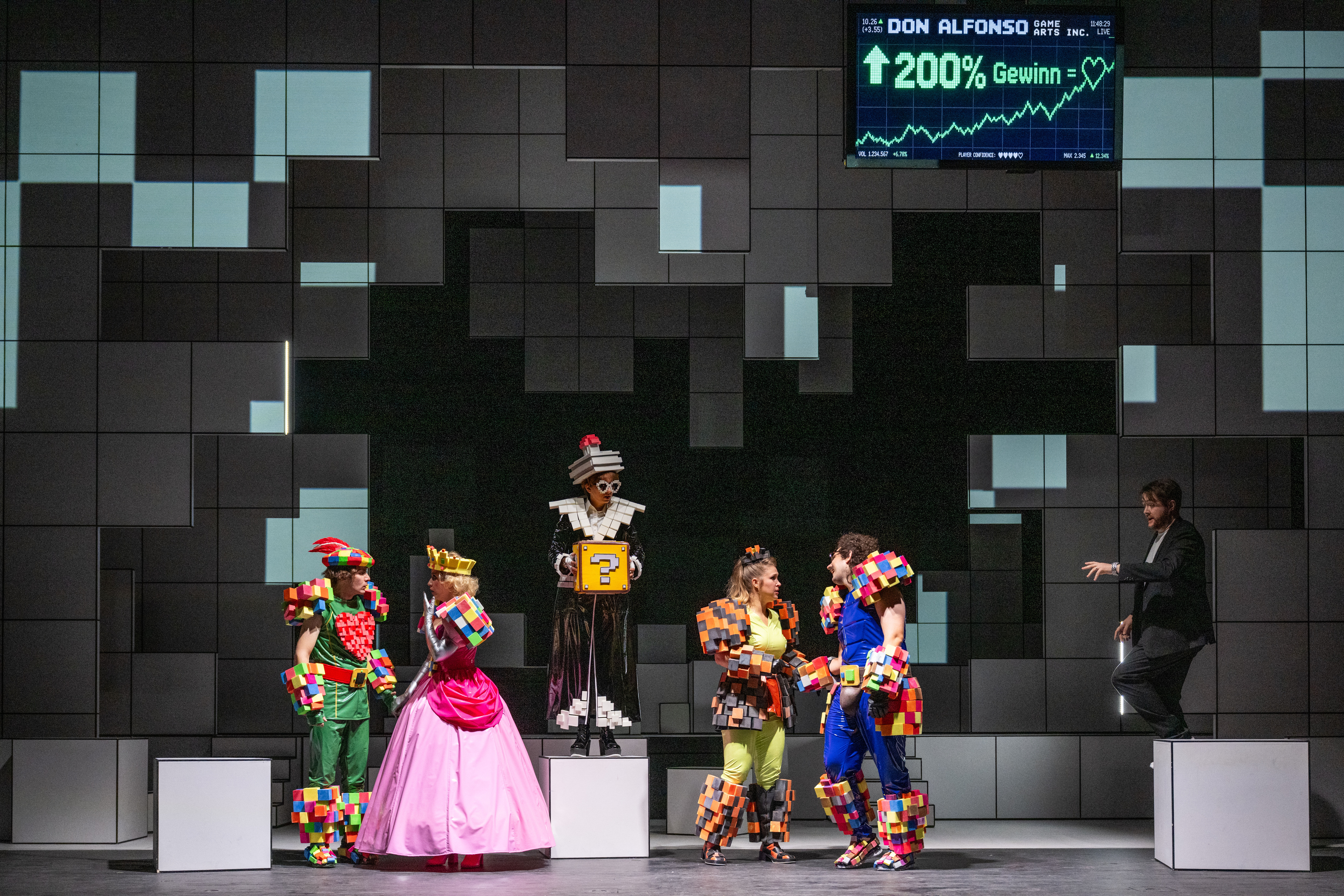
The acting and singing are of a very high standard. All six protagonists embody their roles with clear diction and great authenticity. Marta Kristín Friðriksdóttir, who stepped in at short notice to play Fiordiligi for the evening, displays expressive vitality and delivers a wonderfully gripping and precise ‘Rock Aria’ (Come Scoglio). Weronika Rabek is a delicate yet emphatic Dorabella with a beautifully shaped mezzo-soprano voice.
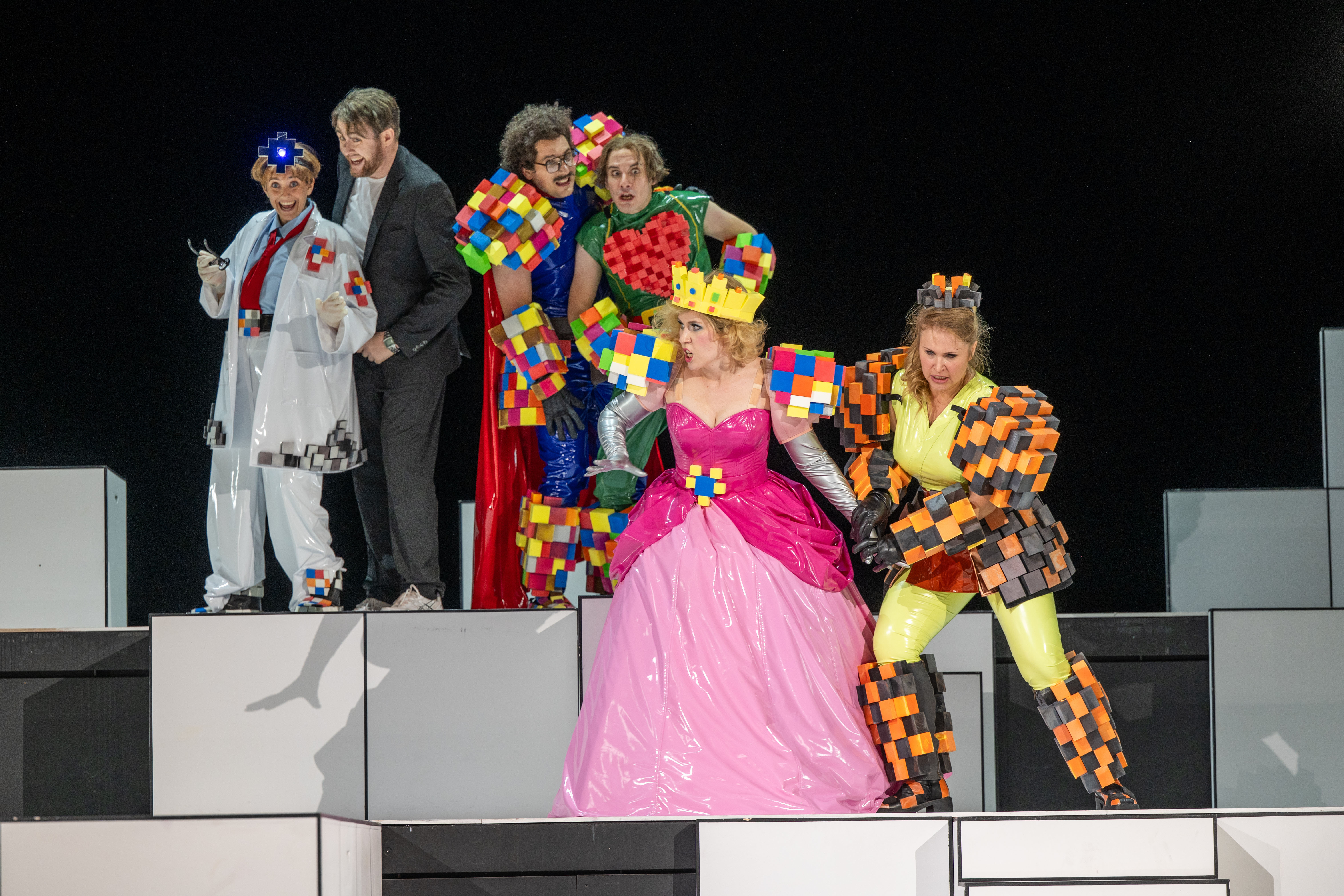
The male cast is led by David Howes as Don Alfonso, with a soft, velvety bass-baritone, whilst Marko Pantelić, as Guglielmo, with a similar timbre to his baritone, is equally convincing with his assured and beautifully shaped delivery. András Adamik’s Ferrando impresses with clear and assured intonation. Sheva Tehoval brings a wealth of fiery stage presence to her portrayal of Despina, with a passionate interpretation and expression.
At the helm of the Magdeburg Philharmonic Orchestra, Sebastiano Rolli gradually finds his way into the conversational accompaniment of Mozart’s music with a cheerful, knowing depth. It sparkles and narrates, whispers and trills with increasing finesse and coherence from the orchestra pit as, after successfully completing various computer levels, the protagonists each stand on a Tetris block of their own choosing for the finale. That’s just how everyone does it, not just the women: the asterisk in the title makes this explicitly clear: “Così fan tutt*e”.