La-La-Land on Braunschweig’s Burgplatz: Philipp Moschitz presents a *Freischütz* from Samiel’s perspective, blending slapstick, wit and a critique of Romanticism. The new Principal Conductor, Friedrich Praetorius, at the helm of the Staatsorchester, increasingly finds his precise command as the performance progresses, building a compelling arc of tension.
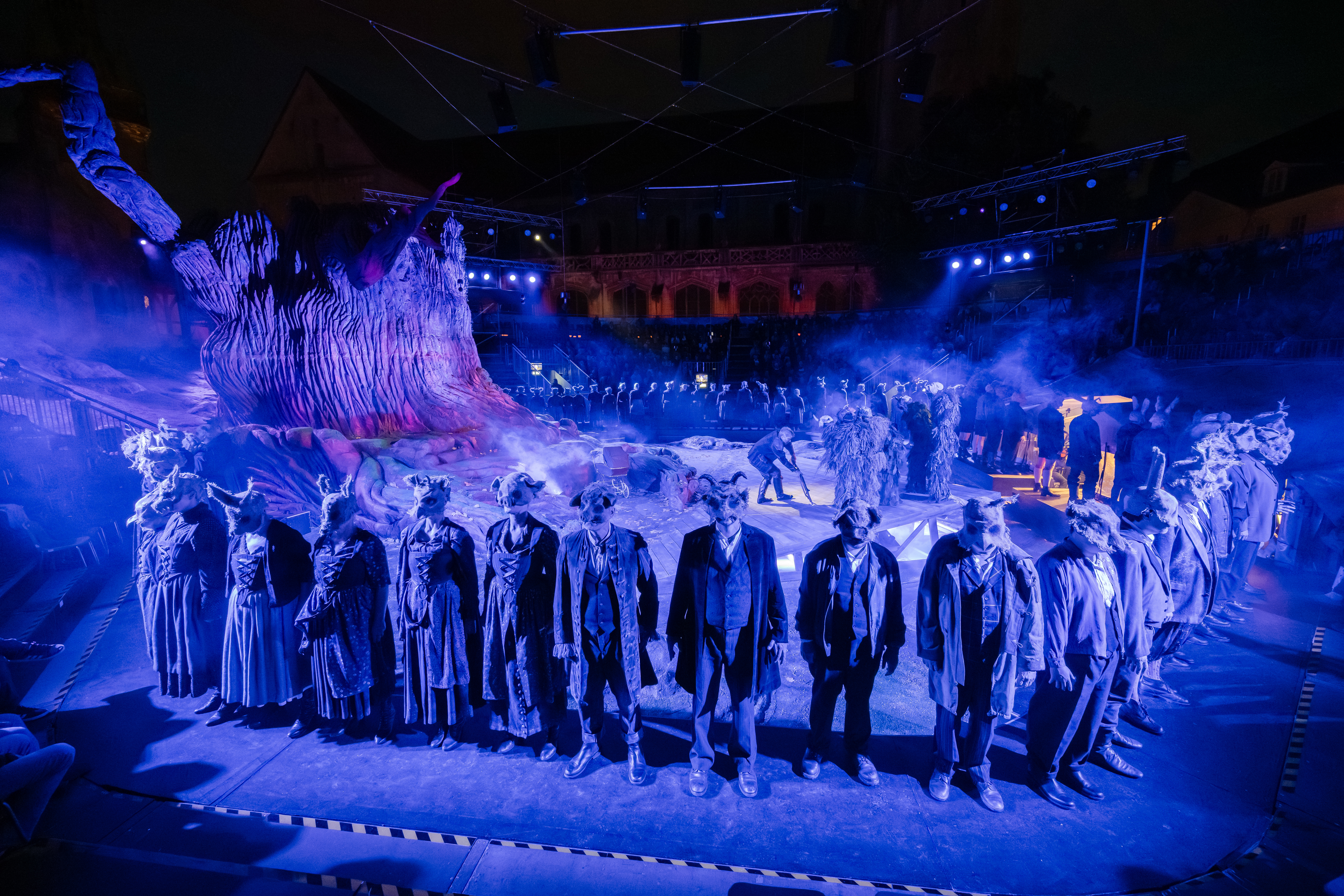
Carl Maria von Weber’s music, despite its catchy, earworm-like numbers, is orchestrated in a profound and dramatic manner – ahead of its time. There are strong echoes of Wagner when, in the Wolf’s Gorge scene, the violins shimmer and one feels as though one is hearing the ‘Forest Weaving’ from *Siegfried*. And at this point, in his first premiere, the young General Music Director succeeds admirably in shaping the music and bringing it to dramatic life. The horns sound beautiful, and the men’s chorus shines magnificently in ‘Was gleicht wohl auf Erden’.
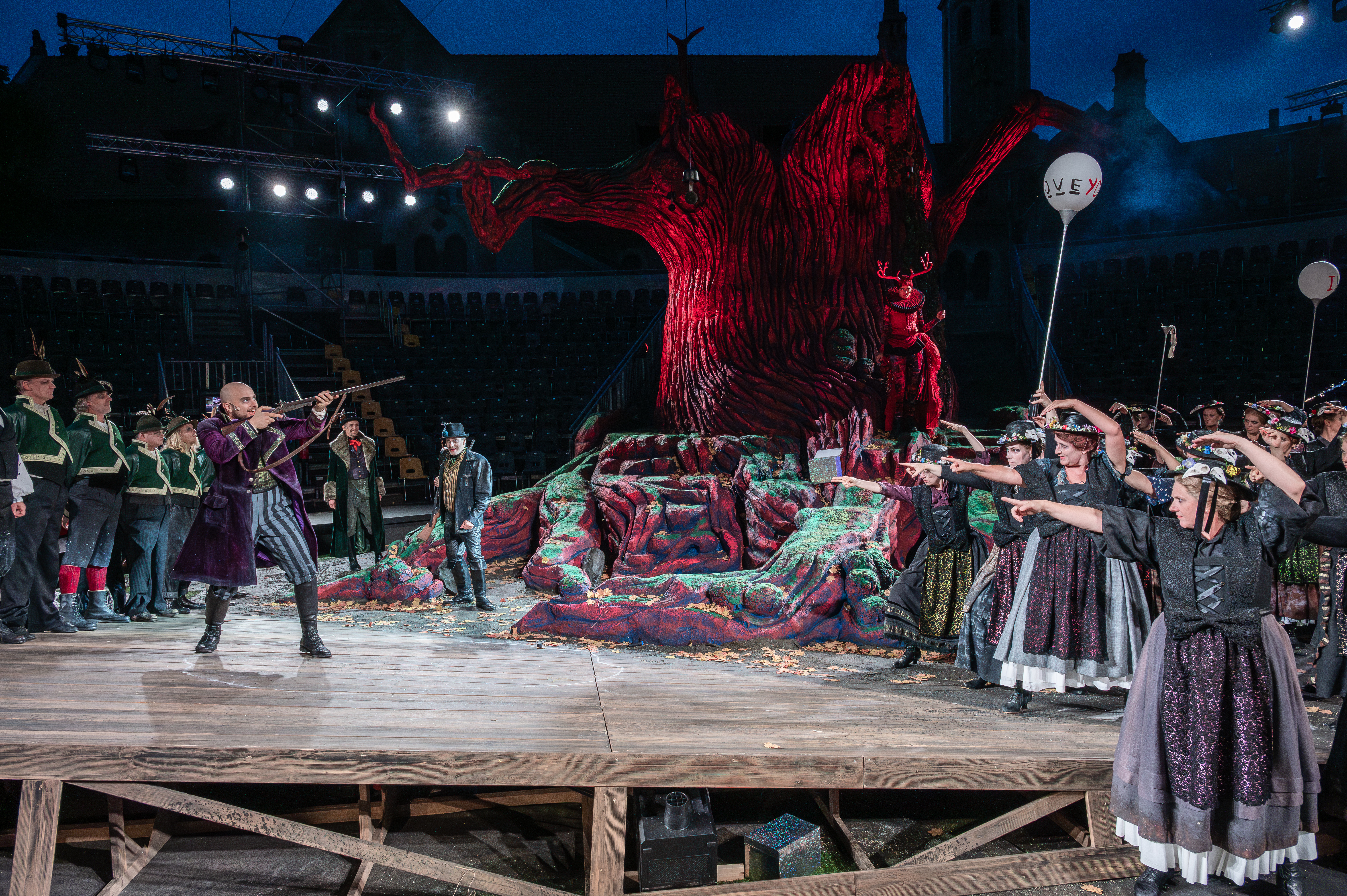
In this open-air production, Samiel is the diabolical adversary who, casting a critical eye, so to speak, exposes and unmasks the traditional male world of hunters in all its conventionality and duplicity. The hunters’ chorus warbles: ‘To pursue the stag, […], is a man’s desire, it strengthens the limbs […], Tra-la-la-la-la!’, whilst the back row of men rhythmically thrust their rifles through the legs of the men in the front row. On the other side stand the women, trembling in the ‘deer’ position. Whether from the roof of the adjacent cathedral, behind the huge tree sculpture that almost completely encloses the Braunschweig castle lion (set design by Matthias Engelmann), or standing in front of the orchestra, pensively murmuring ‘La-la-la…’ – Samiel is the alter ego of this traditional yet outdated Freischütz society. In this ridiculous La-la-Land, the rituals practised around magic bullets, the maiden’s wreath and male humour now seem nothing but absurd and grotesque.
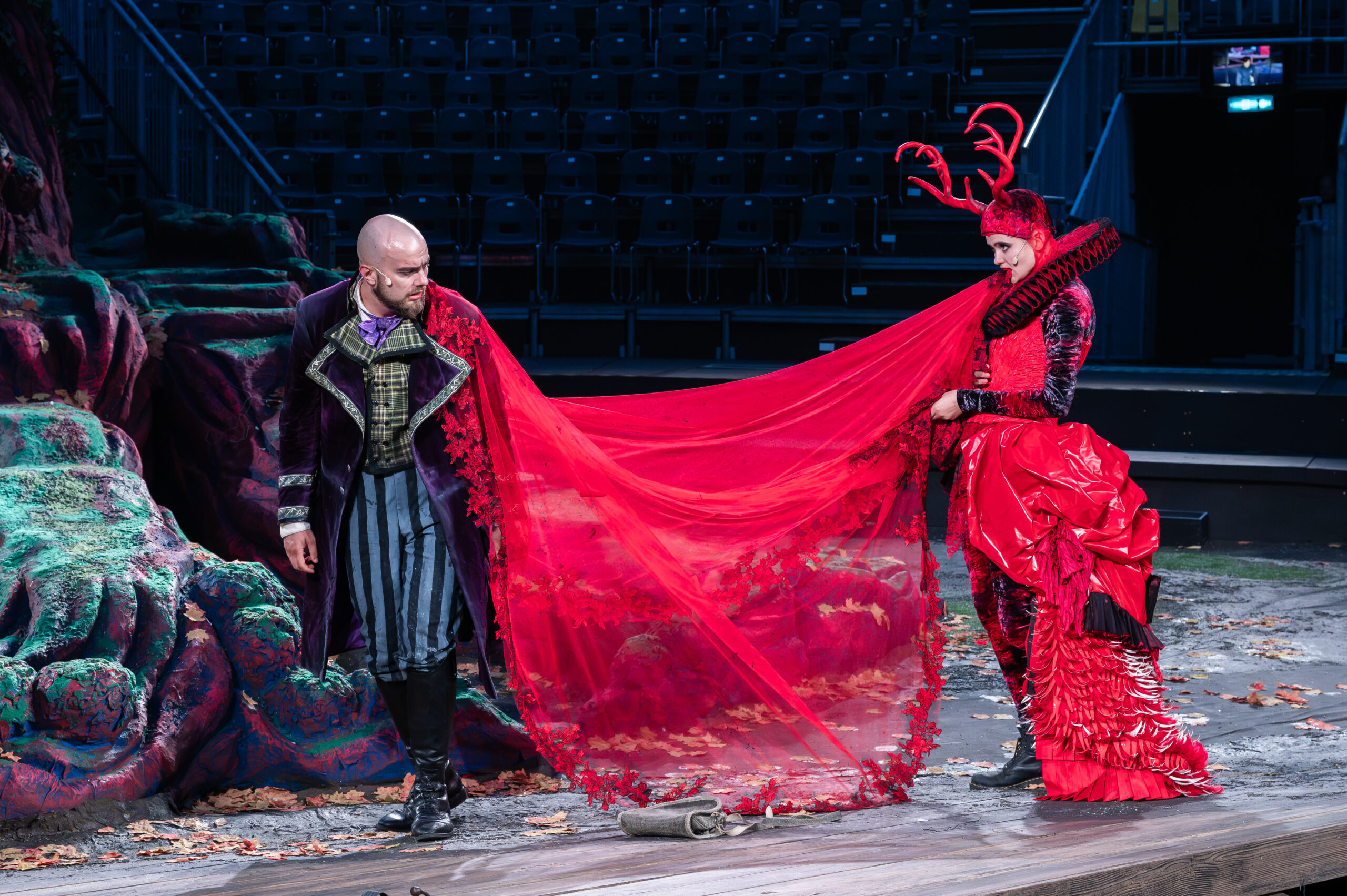
By focusing on and expanding the role of Samiel, played by Lina Witte, director Moschitz has thus also raised the fundamental question of the work’s value: ‘Even the greatest tall tales, told often enough, never become the truth,’ he has Samiel exclaim. Do we need this fairy tale at all? There is no clear answer to this fundamental critique of Romanticism by the end of this production. For in the finale, immediately after being handed a one-year probationary sentence for his transgression, Max (played by Marius Pallesen with appropriate expressiveness and confident intonation) throws his arms round Samiel’s neck. Has Samiel, then, joined the very society she had previously criticised so harshly? The audience is left somewhat perplexed here.
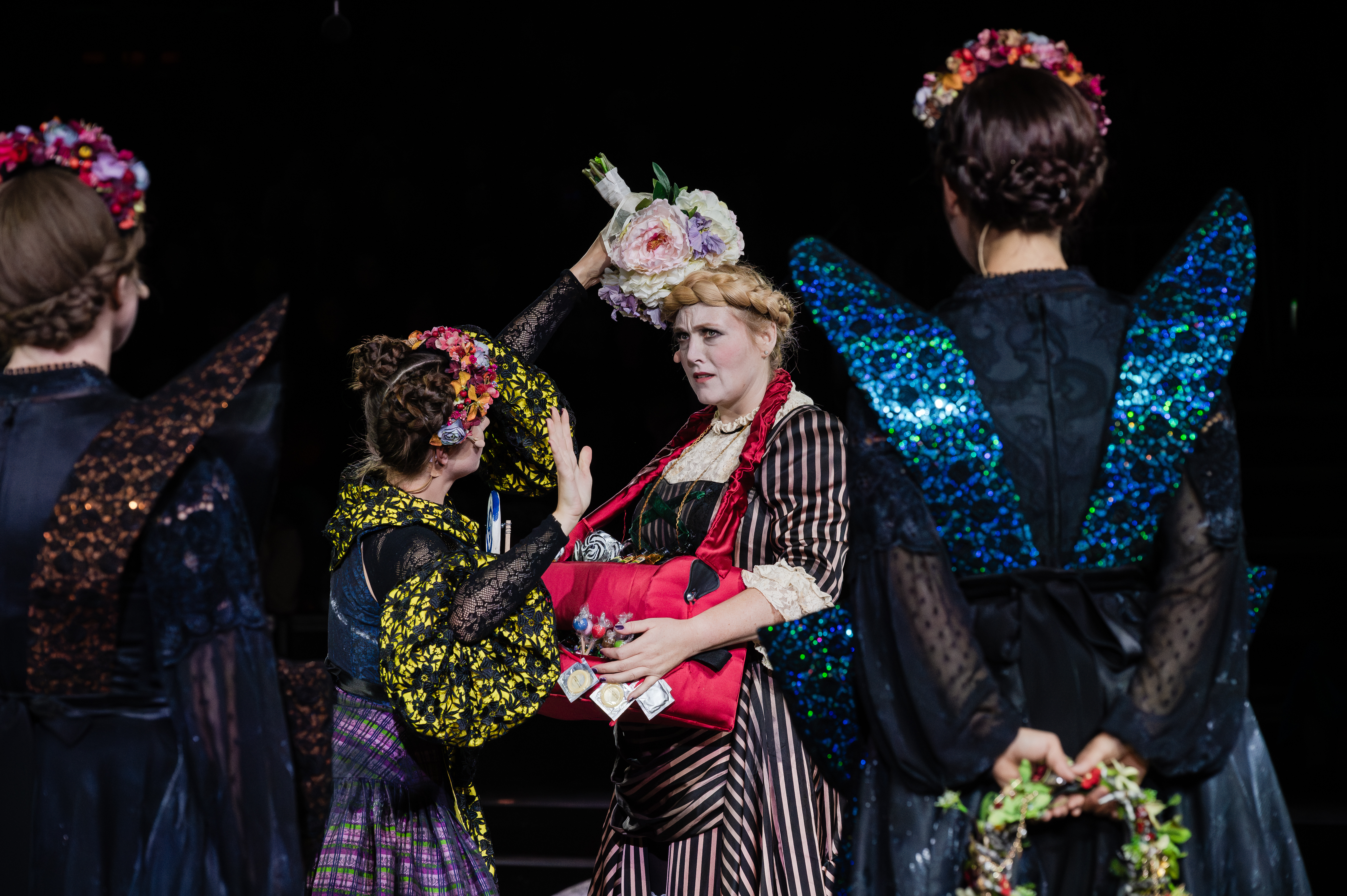
Overall, the evening is peppered with many small directorial touches that one might find amusing or ridiculous. To the tune of ‘Wir winden dir den Jungfernkranz’, the women play and sing their way into a frenzied state at the hen party. It comes across as slapstick, but fitting.
Time and again, the flow of the performance is interrupted by brief interjections from Samiel. ‘Now she’s singing again,’ she exclaims, exasperated, when Marie Maidowski’s Ännchen strikes up yet another of her arias. The Berlin soprano tackles this role with verve and immense musical and dramatic expressiveness, whilst maintaining a wonderfully elegant tone and delivering the text with nuance and clarity. A real discovery!
Dorothea Herbert portrays an Agathe who is as youthful as she is profoundly wise. Kaspar is played by Joshua Bloom with his angular bass voice, who makes a vehement and explicit pact with the Devil. Zachariah N. Kariithi delivers an expressive and commanding performance as Prince Ottokar, whilst Magnus Piontek’s Hermit is highly convincing with his rich bass voice.
Johanna Motter has rehearsed the chorus and extra chorus to sound beautifully powerful and expressive without amplification. The orchestra and soloists are miked, ensuring that the text is generally very clear.
At the end, the audience gives a warm round of applause to everyone involved.