A fraternal quarrel in the house of God. In Dietrich W. Hilsdorf’s production of Alessandro Scarlatti’s oratorio “Cain and Abel”, now transferred to the freshly renovated Cologne opera house, the entire holy family sits at the table in baroque costumes. The setting is a somewhat battered palais which set designer Dieter Richter gradually brings out of the darkness into the light. We in the audience are virtually drawn into the room.
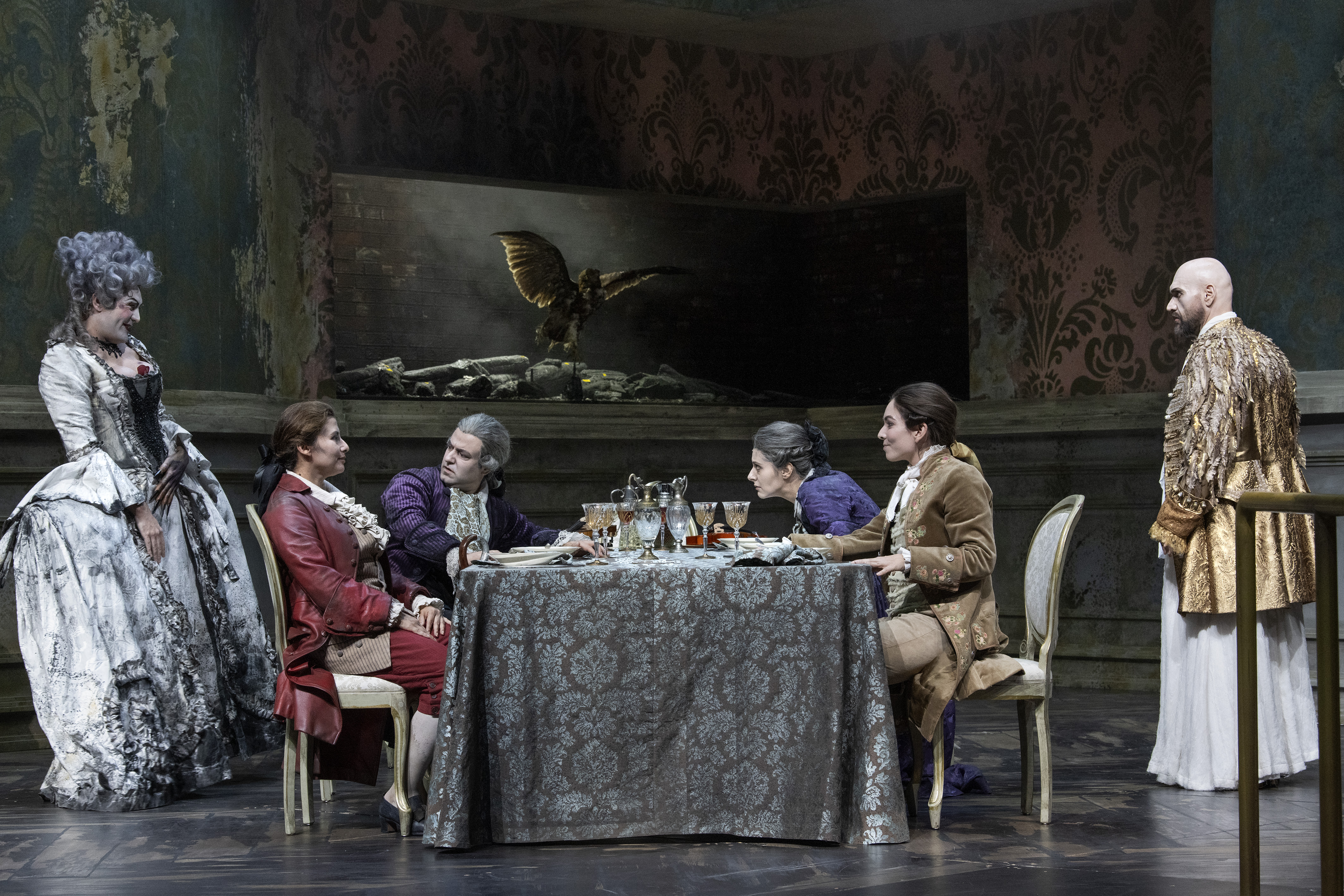
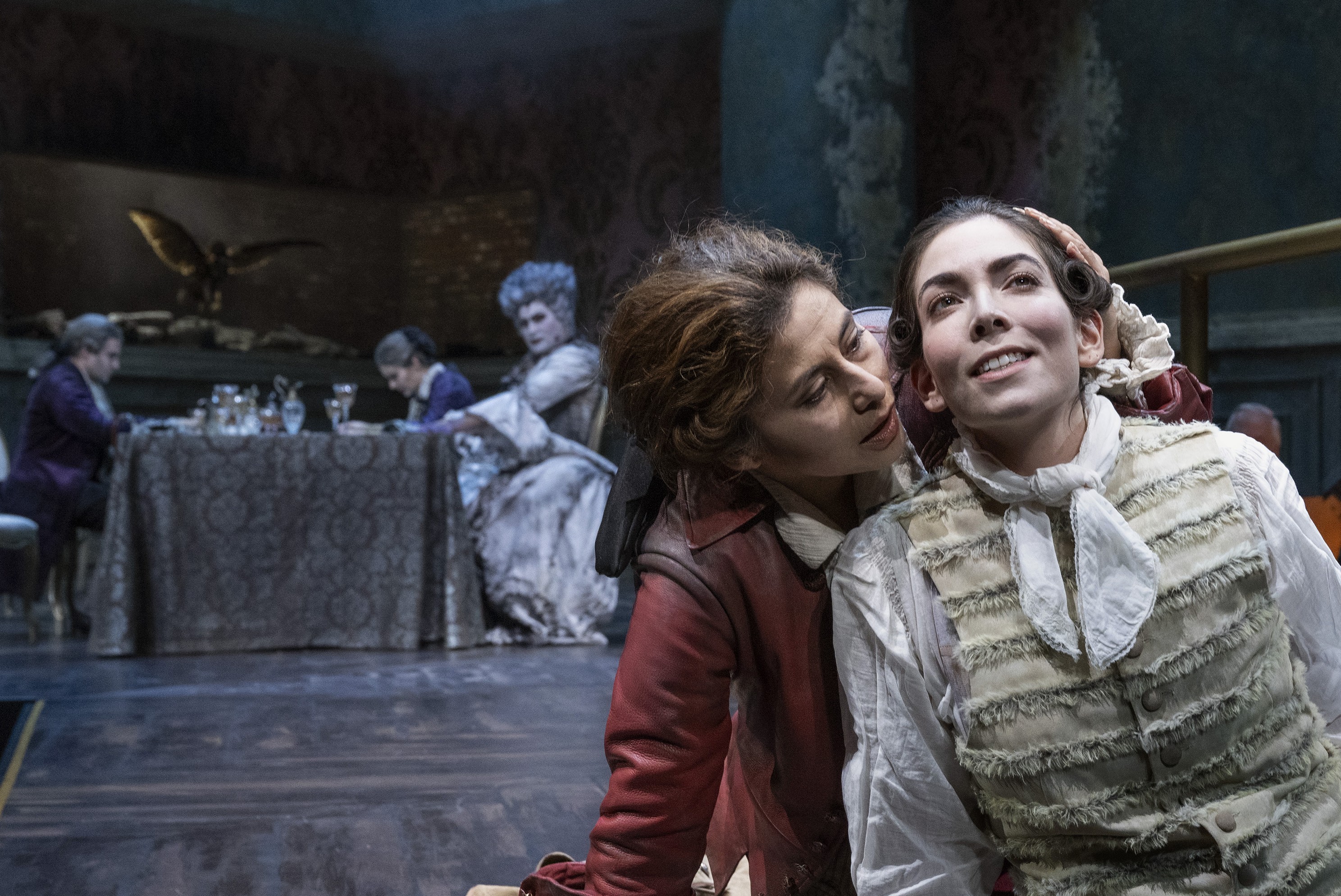
At the table sit the greying father Adam, his somewhat careworn wife Eve, already pregnant again, a rather ingratiating young Abel and his cheekier brother Cain, all stoically spooning their soup. Yet beneath these fine manners something is smouldering. When Mother is seized by stomach cramps, Abel will not rest in his solicitude until he has outdone Cain, who is swiftly fended off by her. Little Abel is then allowed to comfort Mama after all. Back at the table, their glances betray the rivalry, Abel’s self-satisfaction and Cain’s resentment at being sidelined. Siblings will recognise such scenes from everyday life.
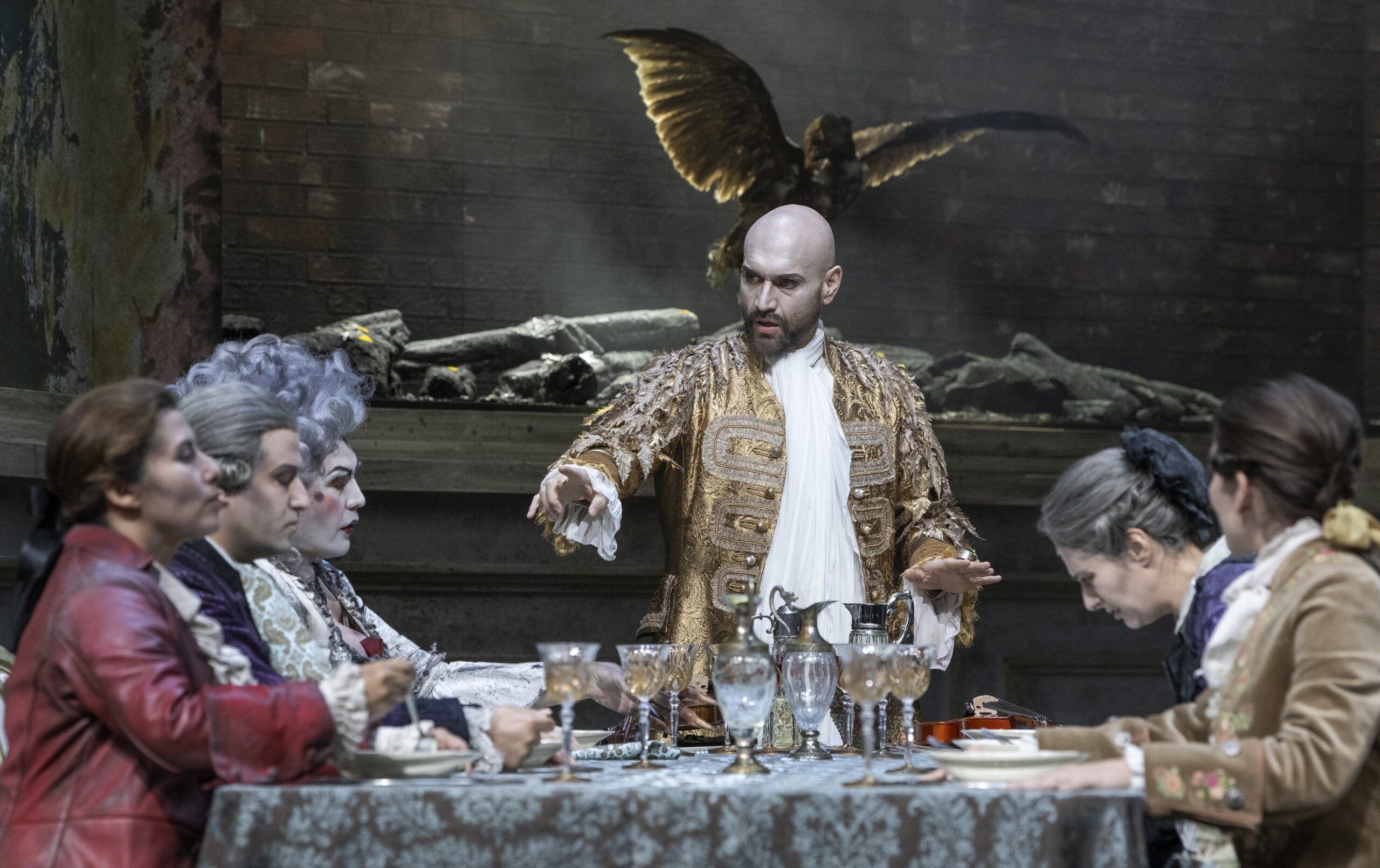
Sadly, the race ends much the same way on a higher level. Sitting at the table too, in a gold jacket over a petticoat, is God the Father. And there is also a somewhat conspicuous aunt with a claw-like hand and a deep voice: the devil in drag. God soon withdraws to one side with his wine in a crystal glass; his earthly relatives have already caused him a great deal of trouble with their wilfulness – the tree of knowledge, sex in paradise and all that. Humans still feel ashamed and want to outdo one another in pious humility. But God dispenses grace as he sees fit: Abel’s sacrificial candle may burn, Cain’s is snuffed out. No wonder Cain seeks support from the devilish aunt and her inflammatory speeches.
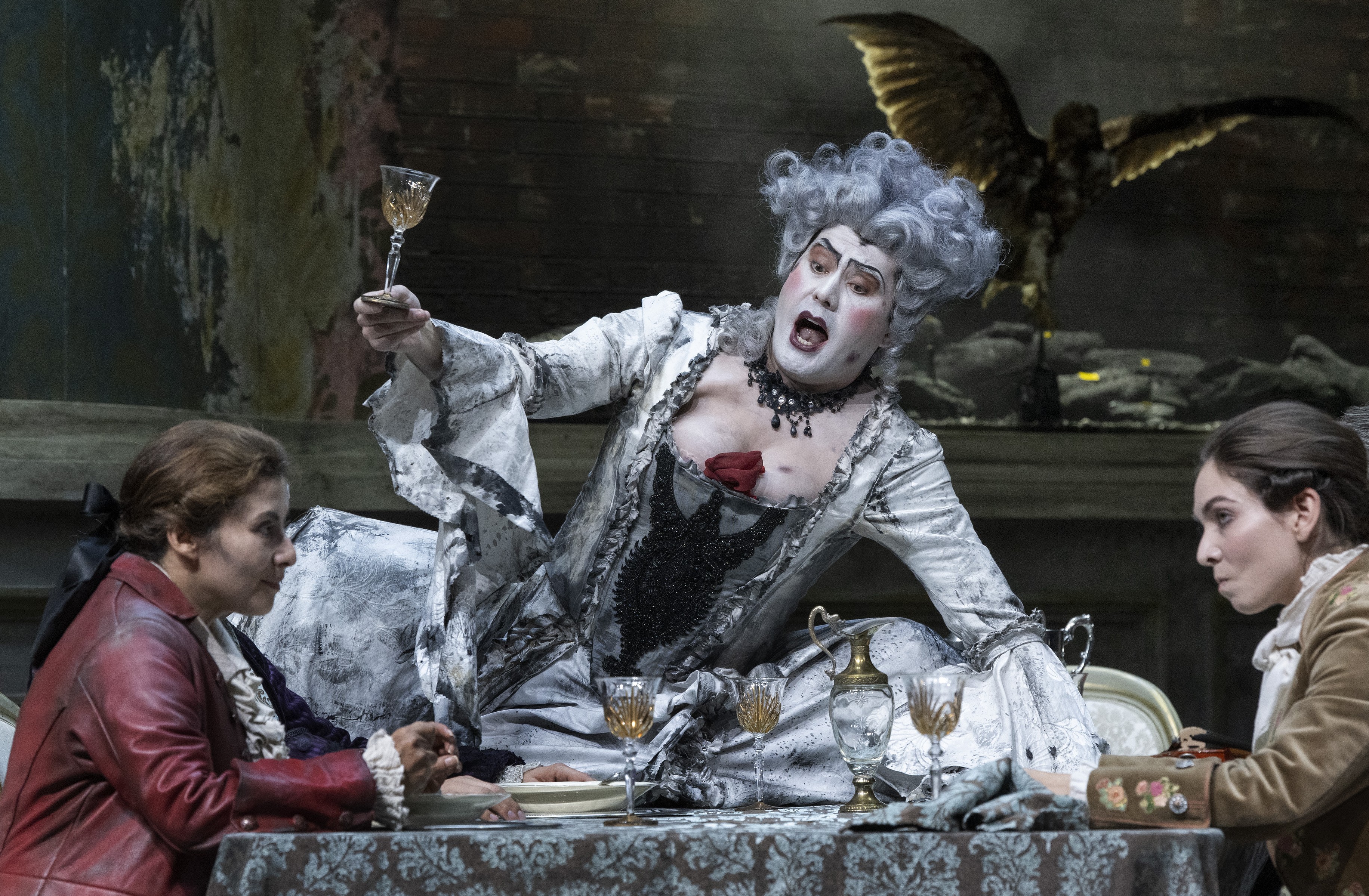
We in the audience are, indeed, rather glad when some variety and pace enter the story with the devil and the healthy, powerful bass of Baurzhan Anderzhanov. The orchestra, too, rumbles and flashes in baroque operatic splendour. In this oratorio, written in 1707 at a time of the Roman ban on opera and described as “musical-spiritual edification”, Scarlatti in fact mostly strikes meditative or plaintive tones.
Rubén Dubrovsky inspires the Gürzenich Orchestra – here almost chamber-like in its concentration and augmented by theorbos and harpsichord – to a silky sound that is emotionally involved in shaping the music. This comes particularly to the fore when, for instance, the warm recorders detach themselves from the ensemble to accompany Cain’s departure, or when the strings gently cushion Scarlatti’s arias.
The brothers, originally sung by castrati, are cast with women in Cologne, which is surprising given the many countertenors and male sopranists we have today. And especially in terms of facial expression this turns the fraternal quarrel into a spat between sisters. Gender fairness also means that men and women encounter one another differently. And perhaps there would have been no murder among sisters. Shortly before the attack Scarlatti briefly unites the two voices in a harmonious duet. As Abel, Alina König Rannenberg offers a fine soprano, while Adriana Bastidas-Gamboa contributes a powerful, sensuous mezzo with virtuously rolling coloratura.
Dmitry Ivanchey’s tenor as Adam could do with more emotional softness, whereas Tamara Banješević’s warm-hearted soprano as Eve shines with lyrical richness and moving inwardness. Xavier Sabata’s countertenor as God has not yet regained its former suppleness and fullness; he was ill at the time of the premiere. As an actor he cuts a fine figure in his somewhat irritated loftiness. But does he love his creatures? Can one love such an embarrassing family?
It will take much more merciful forgiveness than this biblical beginning reveals. He will send his Son, and they will nail even him to the cross. In Cologne, when Scarlatti has the expectation of Christ’s redemption praised, it has to be the unmasked devil who takes on the task of hammering the crucifix to the wall. These are the subtle ideas in Hilsdorf’s utterly unruffled, timeless production.
Meanwhile everyone continues to stoically spoon their soup, behind Sartre’s closed doors (hell is other people, as the programme booklet aptly quotes); the original family that we humans are remains inescapably locked together.