Mr H.’s campaign of revenge is now entering its fifth year: Dmitri Tcherniakov’s consistently ‘ship-free’ interpretation of *The Flying Dutchman* continues to captivate audiences, even five years after its premiere at the festival. Oksana Lyniv’s conducting adds fluid, flowing and precisely pulsating music from the orchestra pit to the gripping story unfolding on stage.
It is the prelude to the thunderous overture that forms the basis of the staging’s narrative. If you don’t pay close attention from the outset, many elements remain obscure. And that is perhaps the main point of criticism regarding this production. For those who aren’t paying attention will quickly lose track of the story.
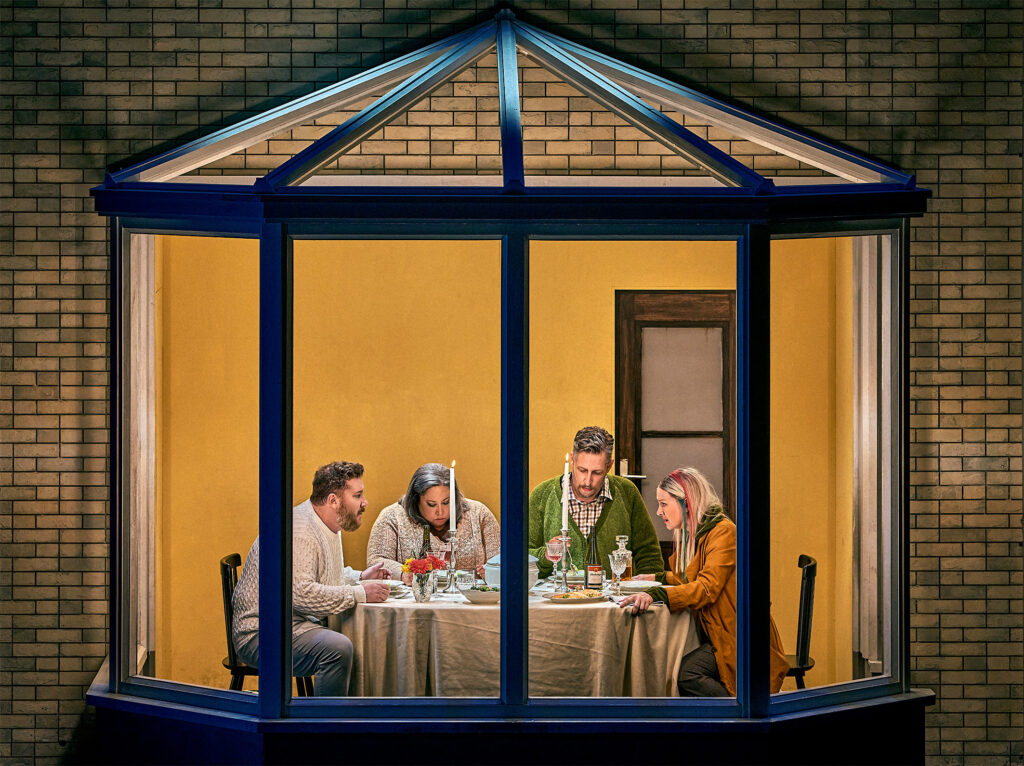
Daland remains the villain who had an affair with the Dutchman’s mother. The staid, insular village community – which, in the director’s own set design, dwells in sterile brick houses – ostracises her. She hangs herself, and the young Dutchman is forced to watch.
Years later, he returns to take revenge on Daland, his family and the entire village. Nicholas Brownlee makes a spectacular debut in his first Bayreuth appearance as the Dutchman with his opening aria: rarely has one heard such an intense, gripping, moving and clearly articulated performance! Subsequently, this triumphant start means he has to cut back a little in the following sections, though he regains his form for the finale. Bayreuth can count itself lucky to have secured him as a new addition.
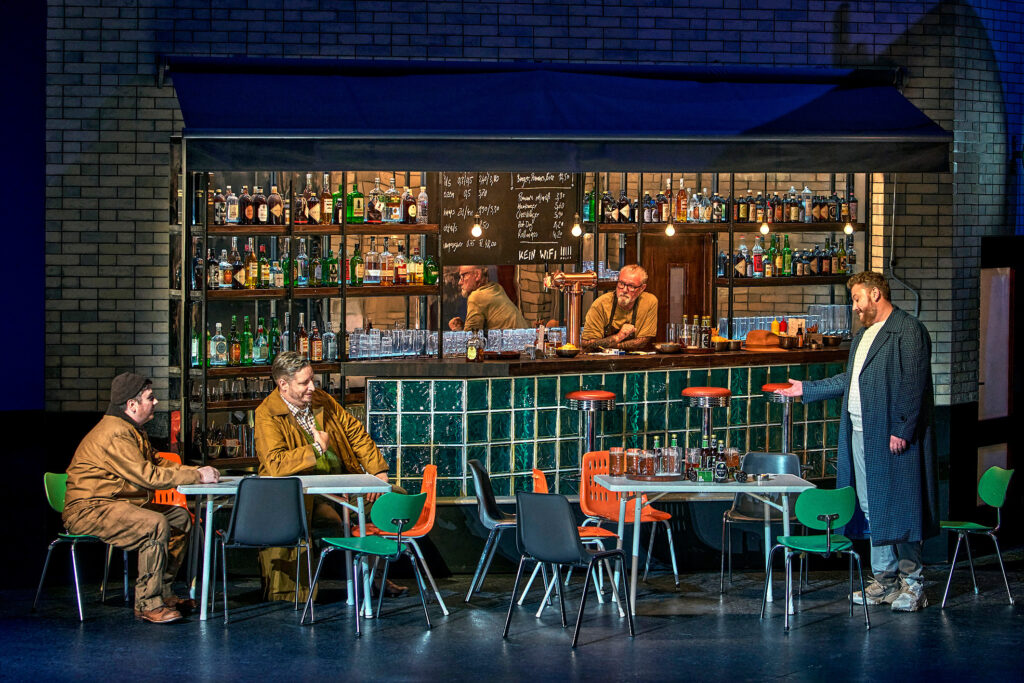
Unfortunately, Elisabeth Teige as Senta cannot hold a candle to him in any passage. Whilst her outbursts are powerful and at times even torrential, she succeeds in achieving accurate intonation and precise vocal control far too rarely. Mika Kares is convincing in his debut as Daland with a beautifully soft, balsamic voice and a characterful delivery.
The director goes to great lengths to illuminate Erik’s relationship with Senta. This is highly convincing, and Benjamin Bruns delivers a thoroughly satisfying performance with highly expressive intonation that is both precise and flowing. Kieran Carrel sings the helmsman in a way that is very clear and refreshing.
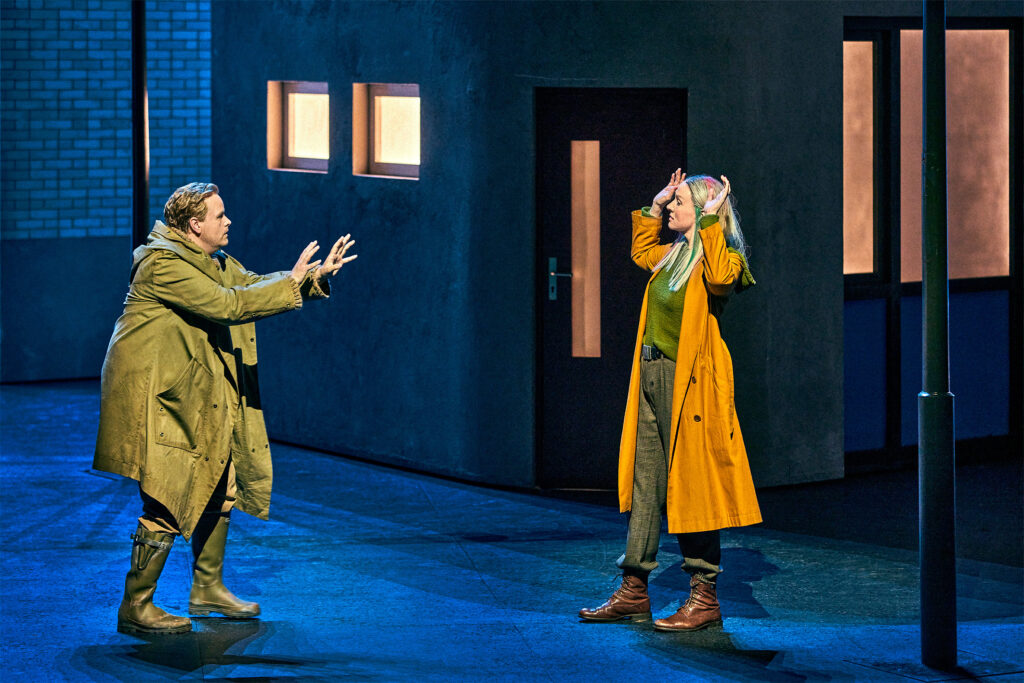
Mary (Nadine Weissmann, with a very deep, shimmering alto) is Daland’s wife and is aware of her husband’s past. She recognises the Dutchman as the story unfolds. After she has shot the Dutchman – who, at the end, has set the whole village alight with his crew – Senta embraces her gratefully. For she has been healed of her naïve girlish dream of having tried to give herself unconditionally to a stranger.
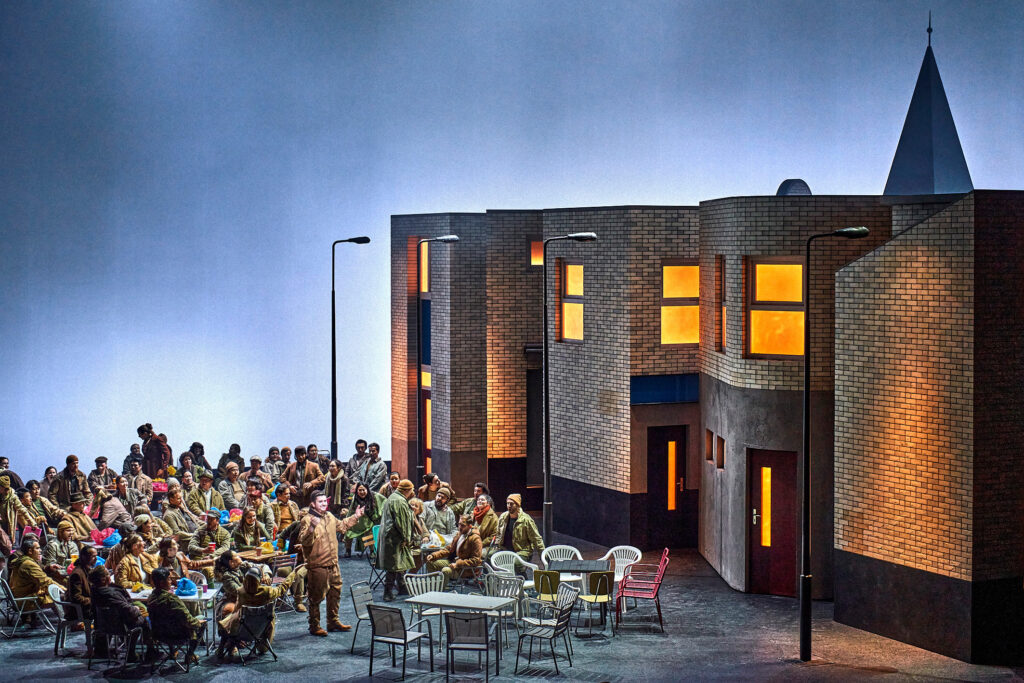
The choruses, rehearsed by Thomas Eitler-de Lint, impress with their highly nuanced, nuanced and precisely shaded interpretation, as well as with magnificent gradations and transitions, which are in no way detracted from by the stage direction involving waving, dancing and fighting.
Oksana Lyniv also makes excellent use of the theatre’s acoustics. The overture roars, yet never becomes tangled, and delivers beautiful, subtle nuances, with the attentive orchestra shifting repeatedly between these and the grand outbursts. Overall, the result is beautifully fluid and not bombastic, but rather complements and supports the director’s clever interpretation of the story.
Thunderous applause for everyone involved.